The Powder Myth: What Tokyo Beauty Insiders Use Instead for a Flawless, All-Day Finish
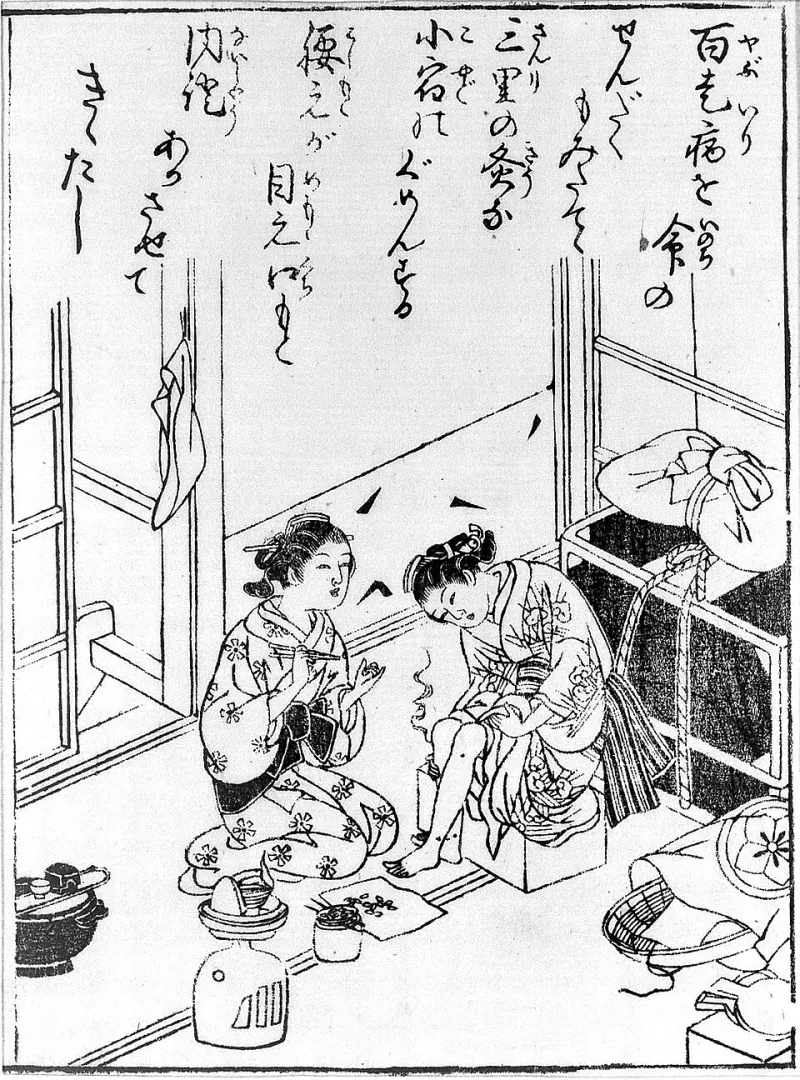
Photo: Unknown, CC BY 4.0, via Wikimedia Commons
Most of us grew up watching our moms press a big fluffy brush into a compact and dust powder across their face like it was second nature. It was the final step, the seal, the thing that made everything stay put. And for a long time, nobody really questioned it.
But if you've ever noticed that your skin looks a little dull by 10am, or that your foundation seems to sit on your face rather than melt into it, the powder might be the problem. In Tokyo, that realization happened a while ago — and the beauty community there has been quietly doing things differently ever since.
Why Tokyo Largely Moved On From Traditional Powder
Here's the thing about conventional setting powders: they work by absorbing oil and creating a matte barrier on top of your skin. Which sounds fine in theory. But that barrier doesn't just block oil — it also blocks light, and it can interrupt the natural texture and movement of your skin in a way that reads as flat or artificial under anything brighter than a dim bathroom.
Tokyo's beauty philosophy is deeply rooted in the idea of hadanuance — skin nuance, the sense that your complexion has depth, translucency, and life to it. A heavy powder finish is almost the opposite of that ideal. So instead of powdering down, Tokyo beauty routines tend to focus on refining skin texture from a completely different angle.
The Ingredient Shift: Silk, Rice, and Skin-Mimicking Minerals
The alternatives that have taken over in Tokyo-formulated finishing products aren't gimmicks. They're built around a handful of specific ingredients that do something traditional talc-based powders simply can't: they interact with light in a way that mimics real skin.
Silk powder (sericin or fibroin) is probably the most well-known. Derived from silkworm proteins, it has an incredibly fine particle size that diffuses light softly rather than blocking it. When applied to the skin, it creates a smoothing effect that feels more like skin itself than a layer sitting on top of it. You won't find a visible finish — just a quiet, refined evenness.
Rice extract and rice starch are another cornerstone of Japanese finishing formulas. Rice has been used in Japanese skincare and beauty for centuries, and its modern cosmetic application is genuinely impressive. Rice starch particles are naturally spherical, which means they scatter light in multiple directions rather than absorbing it flat. The result is a soft-focus effect — similar to what a photographer's diffusion filter does — that minimizes the look of pores and fine lines without making skin look powdered.
Mica and pearl powder blends show up frequently too, but in much smaller concentrations than you'd find in Western highlighting products. The goal isn't shimmer — it's luminosity. There's a difference. A shimmer sits on top. Luminosity looks like it's coming from underneath.
How the Application Technique Changes Everything
Even if you get your hands on the right product, technique matters a lot here. Tokyo's approach to applying these texturizers is more intentional than the sweep-and-set method most Americans default to.
Less product, more precision. Instead of loading a brush and dusting broadly, the Tokyo method tends to involve tapping a very small amount of product onto specific areas — typically the center of the forehead, the nose, the chin, and the inner corners of the eye area — rather than covering the entire face uniformly. This preserves the natural texture of the skin at the perimeter of the face, where heavy powder tends to look most artificial.
Pressing over patting. A lot of Japanese beauty routines use a small, flat sponge or puff to press finishing product into the skin rather than sweeping it across the surface. Pressing embeds the particles into the skin's texture rather than just sitting them on top, which extends wear and keeps things looking more integrated.
Timing matters. Applying finishing texturizer about 60 to 90 seconds after your moisturizer or base has fully absorbed — rather than immediately — allows the skin to settle into its natural state first. You're finishing a real surface, not a still-wet one.
What to Actually Look For on the Label
If you want to experiment with this approach, you don't need to throw out everything in your makeup bag. Start by looking at the ingredient list on any finishing or setting product you're considering.
Things to look for: sericin, silk powder, hydrolyzed silk, oryza sativa (rice) starch, oryza sativa extract, pearl powder, sodium hyaluronate (yes, some Japanese finishing powders include hydrating actives), and spherical polymethylsilsesquioxane — a silicone-derived ingredient that creates that signature Japanese soft-focus blur without heaviness.
Things to be more cautious about: talc as the primary first ingredient, heavy concentrations of kaolin or bentonite clay (these are serious oil absorbers, better suited to clay masks than daily finishing), and fragrance or alcohol high on the ingredient list, which can dry out skin and make texture look worse over the course of the day.
The Hydration Factor Nobody Talks About
One underrated reason Tokyo's finishing approach works so well is that it doesn't fight against skin hydration — it works with it. Traditional powder formulas, especially matte ones, can actually make skin look more textured as the day goes on because they disrupt the skin's natural moisture balance. When skin is dry, pores and fine lines become more visible, not less.
Japanese texturizing products are often formulated with this in mind. Ingredients like hyaluronic acid, glycerin, and hydrolyzed collagen show up in finishing products that would seem like unusual places to find them in an American context. But it makes total sense once you understand the goal: you're not just setting your makeup, you're maintaining the quality of your skin's surface throughout the day.
Making It Work in the US
American skin conditions and climates vary wildly, which is worth keeping in mind. If you live somewhere humid — think Florida, Houston, New Orleans — the lighter Tokyo approach will likely feel incredible because your skin doesn't need heavy oil absorption to begin with. If you're in a drier climate like Denver or Phoenix, the added hydration in Japanese finishing formulas is going to be a genuine upgrade over anything that's been stripping moisture away.
For oilier skin types in hot, humid American summers, you might find that a very light application of a rice starch-based product in your T-zone (applied with a pressed-sponge technique rather than a fluffy brush) gives you the longevity you need without the flatness.
The broader takeaway is that finishing your skin doesn't have to mean covering it. Tokyo figured that out a while ago, and the results — that effortless, second-skin look that always seems just slightly out of reach in a Western routine — are worth paying attention to.