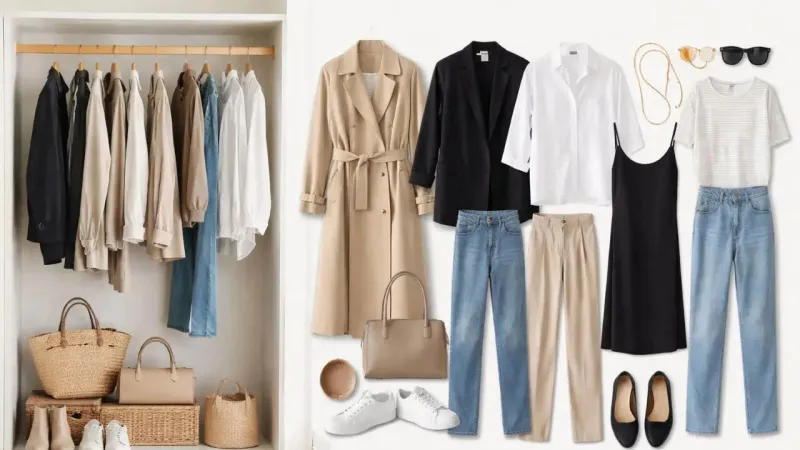
Three Bags, Infinite Outfits: The Tokyo Minimalist's Secret to Carrying Less and Looking Better

Photo: Fujisun, CC BY-SA 4.0, via Wikimedia Commons
Walk through Daikanyama or Aoyama on any given afternoon and you'll notice something that feels almost radical by American standards: the women here aren't weighed down. No tote-plus-crossbody-plus-clutch situation. No bag-within-a-bag chaos. Just one considered, beautiful piece that looks like it belongs exactly where it is.
This isn't an accident. It's a philosophy — and once you understand it, your relationship with bags (and the closet shelf currently buried under them) will never be quite the same.
Why Tokyo Dresses Down Its Bag Collection
In American fashion culture, bags have become a kind of collecting sport. There's the gym bag, the work tote, the weekend crossbody, the going-out clutch, the farmers market canvas, the vacation backpack. The list expands with every season and every trend cycle.
Tokyo fashion culture pushes back hard against that accumulation reflex. The Japanese concept of ma — a mindful appreciation of empty space — extends far beyond interior design and into personal style. Owning fewer things, but better things, isn't just practical. It's considered an aesthetic statement in itself.
"A bag that does one job perfectly is less interesting to me than a bag that does five jobs beautifully," says Haruka Nishimoto, a Tokyo-based accessories designer whose label, Shiro Mono, has developed a quiet following among style-conscious shoppers in New York and Los Angeles. "I design with the idea that every detail should earn its place. A strap that can't be adjusted, a lining that can't be wiped clean — those are failures of design, not just inconveniences."
That design-first thinking shapes the entire Japanese bag market in ways that feel almost invisible until you know what you're looking at.
The Design Features That Do the Heavy Lifting
What makes a Tokyo-approved bag different from the average American It Bag? It comes down to a handful of specific, intentional features that prioritize function without sacrificing form.
Convertible straps are non-negotiable. A bag worth owning in the Tokyo minimalist framework can shift from shoulder carry to crossbody to top-handle — sometimes all three — within seconds. Magnetic clasps, removable chain straps, and adjustable leather tabs aren't afterthoughts; they're load-bearing design decisions.
Neutral color palettes that actually stay neutral. This sounds obvious until you realize how rarely it's executed well. True Tokyo neutrals aren't just black or beige — they include warm greiges, dusty slate blues, deep forest tones, and off-whites that read as sophisticated rather than sterile. The goal is a color that disappears into any outfit rather than competing with it.
Modular compartments over open cavities. Japanese bag design tends to favor internal structure — zippered pockets sized for specific items, card slots built into the body rather than shoved in as an afterthought, flat bases that let the bag stand on its own. Organization isn't an add-on. It's architecture.
Hardware that ages well. Brushed gold, oxidized silver, matte black — Tokyo bags tend to avoid anything too shiny or trend-specific. The idea is that the hardware should look better in three years than it does on day one.
The Three Bags You Actually Need
So what does the actual Tokyo minimalist formula look like in practice? Nishimoto and several other Tokyo-based designers and stylists tend to land on the same three archetypes, regardless of their specific aesthetic.
1. The Structured Day Bag
This is your workhorse — the bag that goes to the office, to coffee, to a gallery opening, and to a dinner reservation without missing a beat. Think a medium-sized tote or top-handle bag with enough interior structure to keep things organized but enough softness to avoid looking corporate. It should be large enough to hold a tablet or a slim laptop, but not so large that it becomes a moving storage unit.
In Tokyo, this bag is almost always in a neutral that works with both dark and light clothing — a warm tan leather, a deep charcoal, a clean off-white. Avoid logos. The bag should look like a design decision, not a brand advertisement.
2. The Compact Crossbody
For evenings, weekends, and any moment when you genuinely don't need to carry your entire life, the compact crossbody is your answer. This bag lives in the same neutral family as your day bag but reads as slightly more casual or slightly more dressed up depending on its material and silhouette.
The key here is the strap. It should be long enough to wear across the body comfortably, but also detachable so the bag can function as a small clutch when the occasion calls for it. Structured enough to hold its shape, soft enough to feel relaxed.
3. The Lightweight Carry-All
This is not a tote bag in the American sense — not a canvas grocery bag with a brand name on it. The Tokyo carry-all is a considered, packable bag in a durable but refined material (think coated canvas, waxed cotton, or a very good nylon) that folds down when not in use. It's for travel, for days when you're hauling more than usual, for the gym, for the market.
The critical distinction is that it still looks intentional. It should be able to sit next to your structured day bag without looking like it wandered in from a different wardrobe entirely.
Making the Switch
The hardest part of adopting the Tokyo bag formula isn't finding the right pieces — it's letting go of the ones that don't make the cut. The good news is that this philosophy doesn't require a single dramatic purge. Start by identifying which bags in your current collection actually meet the convertible, neutral, structured criteria. You might already have one or two candidates.
From there, it's about filling the gaps intentionally rather than reactively. Resist the seasonal drop. Resist the sale. Ask instead: does this bag do more than one thing beautifully? Will it look right in five years? Does it solve a real gap in my collection, or just add another option I don't need?
That last question is very Tokyo. And honestly, it's a pretty good question for everything else in your closet too.