Stop Trusting Your Gut: The Tokyo Method for Editing Your Closet Without the Guilt Trip
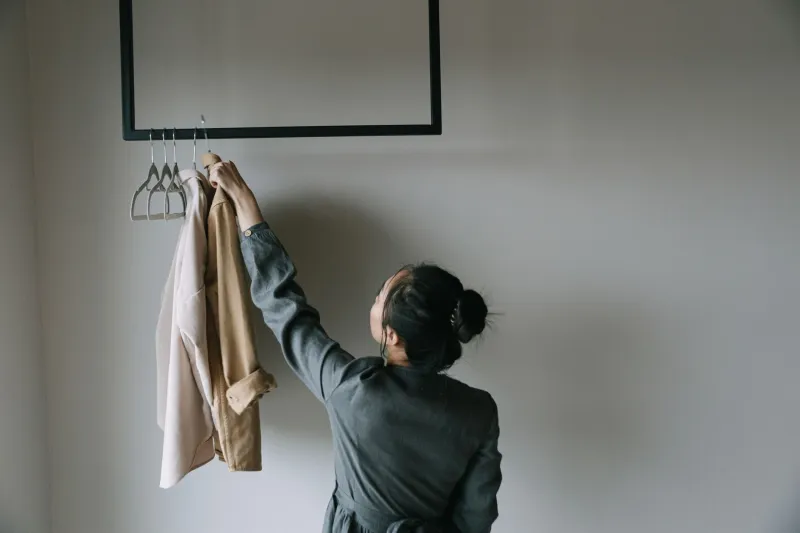
Here's a scenario you've probably lived: you open your closet, stare at a full rack of clothes, and still feel like you have nothing to wear. You've tried the big cleanout before. You made a pile, second-guessed half of it, and quietly rehung most of it "just in case." Three months later, nothing changed.
Tokyo's fashion editors have a word for this cycle: mottainai paralysis. It's the guilt of getting rid of something that cost money, held a memory, or might theoretically be useful someday. And it's the single biggest reason American closets stay cluttered even after a so-called purge.
The Tokyo approach to a closet audit isn't about minimalism as an aesthetic goal. It's about function — building a wardrobe that works every single day, not just in theory. And the first thing it requires is accepting one uncomfortable truth: your gut feeling about what to keep is almost always wrong.
Why Your Instincts Are Lying to You
When you hold up a piece of clothing and feel a pull to keep it, that pull is almost never about the garment itself. It's about the version of yourself you imagine wearing it. The blazer you bought for a job interview three years ago. The dress that fits perfectly but only if you pair it with exactly the right shoes, bag, and mindset. The jeans from college that technically button.
Japanese fashion editors call these pieces phantom wardrobe — items that exist for a fictional future self rather than your actual daily life. They look fine on the hanger. They might even look fine on you. But they never actually get worn, because real life never quite matches the scenario you bought them for.
The Tokyo method doesn't ask how something makes you feel. It asks how it performs.
The Three-Question Framework
Before anything gets a yes or a no, Tokyo's closet audit runs every piece through three specific questions — in order. Skipping ahead doesn't work.
1. Does it fit right now, as you are today?
Not "does it fit if I lose ten pounds" or "does it fit if I wear the right undergarment." Right now, today, on your actual body — does it fit? This question sounds obvious, but it's where most people stall out. Keeping clothes for a body you don't currently have is one of the most common ways closets get clogged with things that generate guilt every time you see them.
If it doesn't fit, it goes. Not because your body is wrong, but because a closet full of aspirational sizing doesn't help you get dressed in the morning.
2. Have you worn it in the last 90 days?
Not six months. Not a year. Ninety days. Tokyo's fashion editors work on a seasonal rotation, and the logic is simple: if a piece was available to you and you didn't reach for it across an entire season, you're not going to suddenly start. There's always an exception — a formal piece, a heavy winter coat in July — but for everyday items, 90 days is the honest benchmark.
If the answer is no, it moves to the maybe pile, not the keep pile.
3. Does it work with at least three other things you already own?
This is the question most Western decluttering methods skip entirely, and it's the one that makes the biggest difference. A piece might fit perfectly and get worn occasionally, but if it only works with one specific outfit combination, it's earning very little closet real estate for the space it takes up.
Tokyo's wardrobe philosophy is built around versatility — not in a boring, everything-is-beige way, but in a genuinely practical sense. If you can't mentally build three distinct outfits around a piece in under thirty seconds, it's not pulling its weight.
The Maybe Pile Is a Trap
Every closet audit produces a maybe pile, and in the Tokyo method, the maybe pile has a strict rule: it gets boxed, dated, and stored out of sight for thirty days. Not in your closet. Not "just over here in the corner." Physically out of your daily environment.
If you don't go looking for something in that box within thirty days, you have your answer. If you do go looking — if you genuinely miss it — it earns its way back in.
This isn't about being cold or unsentimental. It's about separating the things you actually live in from the things you just think you should keep. The box test makes that distinction undeniable.
Sentimental Pieces Get Their Own Category
The Tokyo method doesn't pretend that clothing is purely functional. A T-shirt from a concert you'll never forget, a jacket your mom gave you, the dress you wore on a genuinely great night — these things carry weight that goes beyond fit and frequency.
But they also don't belong in your everyday closet. Japanese fashion editors keep a small, intentional archive — a separate drawer or box — for pieces that hold real meaning but aren't part of the daily rotation. This way, they're preserved and respected without cluttering the space you actually get dressed from.
Limiting yourself to a specific number — say, ten to fifteen pieces maximum — forces you to be honest about what's truly meaningful versus what you're just reluctant to let go of.
What a Finished Tokyo Audit Actually Looks Like
When Japanese fashion editors finish a closet audit, the result isn't a dramatically sparse rack of identical neutral pieces. It's a wardrobe where everything visible is something they'd genuinely reach for. There's breathing room between hangers. Getting dressed in the morning takes less mental energy because every option is a real option.
For American closets — which tend to run significantly larger and significantly more cluttered — getting there usually means being more decisive than feels comfortable the first time. The guilt is real. So is the relief on the other side of it.
The Tokyo method works because it removes emotion from the initial decision and replaces it with criteria. Fit, frequency, versatility. Three questions, one honest answer. Your gut might protest, but your mornings will thank you.
Start with one section of your closet — just tops, or just pants — and run the framework once. See what survives. Then decide if you want to keep going.