Beyond 'Does This Color Work on Me?': Tokyo's Smarter Way to Build a Palette You'll Actually Love
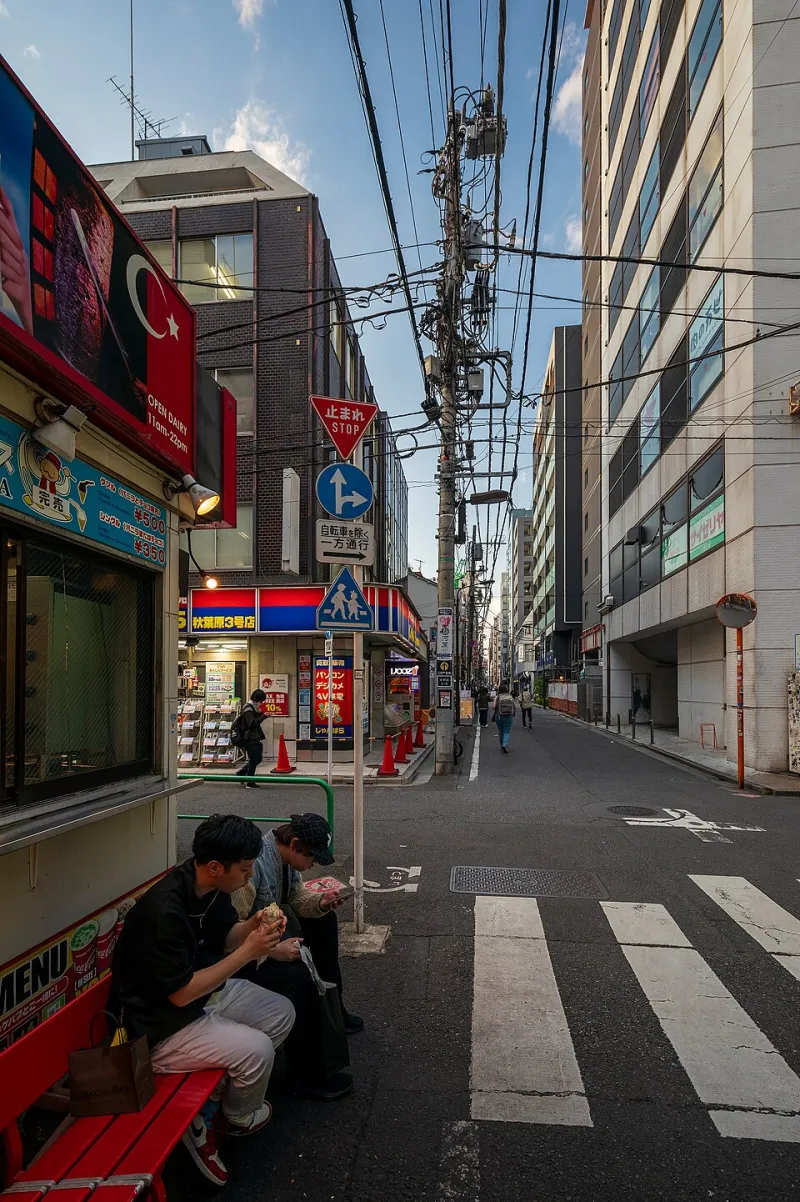
Photo: Ximonic (Simo Räsänen), CC BY-SA 4.0, via Wikimedia Commons
If you've ever sat through a color analysis appointment, dutifully held fabric swatches under your chin, and walked away more confused than when you started — you're not alone. The Western approach to color and clothing has a tendency to turn something instinctive into something clinical. Warm undertones. Cool seasons. The 'right' burgundy versus the 'wrong' one. It's a lot.
Tokyo fashion doesn't really operate that way. And once you understand why, you might find yourself rethinking the entire foundation of how you get dressed.
Harmony Over Correctness
The core difference between Western color theory and the way Tokyo stylists tend to think about it comes down to one word: harmony. In Japan, the aesthetic concept of ma — the idea of meaningful space and balance — quietly influences everything from interior design to the way an outfit is put together. Color isn't judged in isolation. It's evaluated in relationship to everything around it: the other pieces in the outfit, the texture of the fabric, the occasion, even the wearer's current energy.
This is a pretty radical departure from the 'does this shade flatter my skin tone?' checklist most of us grew up with. In Tokyo street style, you'll regularly see combinations that would make a Western color consultant wince — dusty lavender with warm camel, muted olive layered over cool grey — and yet somehow it all looks completely intentional. That's because it is intentional, just not in the way we've been trained to expect.
Mood as a Color Compass
One of the most practical things Tokyo stylists do differently is treat mood as a legitimate starting point for color decisions. Rather than asking 'what colors are objectively flattering on me,' the question becomes 'what colors feel right for who I am right now?' That's not wishy-washy — it's actually a more sophisticated framework.
Think about it this way: you probably already do this intuitively. There are days when you reach for something soft and muted because that's the energy you're bringing. Other days call for something sharper, more saturated. Tokyo fashion leans into that instinct rather than overriding it with a rulebook.
Building a wardrobe around mood-forward color choices means your closet ends up reflecting your actual personality rather than a prescribed palette someone else handed you. The result tends to be more cohesive, too — because everything in it was chosen with the same internal compass.
The Role of Proportion in Color
Here's something Western color theory almost never talks about: proportion matters just as much as hue. Tokyo stylists are incredibly intentional about how much of any given color appears in an outfit. A color that feels overwhelming at full volume might be exactly right as an accent. Something you'd never wear head-to-toe could be the perfect detail that pulls a whole look together.
This is why so many Tokyo outfits feel balanced even when they're technically 'mismatched.' The distribution of color is doing a lot of the work. A deep navy coat over a soft cream base reads completely differently than the same navy worn as a top with matching trousers. Same color, totally different feeling.
When you're building your own palette, try thinking in percentages. What's your dominant color — the one that takes up the most visual space? What's your secondary, and what's the accent? Tokyo minimalism tends to favor a 70/20/10 split: a lot of neutral, a meaningful secondary, and a small hit of something unexpected. It's a simple framework, but it gives you a lot of room to play.
Letting Go of 'Flattering'
The word 'flattering' in Western fashion almost always means one thing: does this make me look slimmer, brighter, more conventionally attractive? Tokyo's aesthetic vocabulary doesn't prioritize that the same way. The goal isn't to optimize your appearance against some external standard — it's to express something true about yourself.
That shift in intention changes everything about how you shop and how you get dressed. Instead of asking 'does this wash me out,' you might ask 'does this feel like me?' Instead of avoiding a color because a magazine told you it's wrong for your undertone, you might wear it anyway because it makes you feel calm, or powerful, or interesting.
None of this means Tokyo fashion is chaotic or anything-goes. Quite the opposite — the restraint and intentionality are very real. But the criteria are just different. Personal resonance over external validation. Harmony over correctness.
Building Your Tokyo-Influenced Palette
So what does this look like practically? Here are a few ways to start applying this logic to your own wardrobe:
Anchor in neutrals you actually love. Not the ones you think you should love. Tokyo wardrobes tend to build around a personal neutral — often something with a little more character than plain black, like a warm greige, a dusty white, or a cool charcoal. Pick the one that genuinely feels like home to you.
Choose one or two 'mood colors.' These are the colors you consistently reach for when you want to feel like yourself. They don't have to match your skin tone perfectly. They just have to feel right. For a lot of people, this ends up being something a little unexpected — a muted sage, a soft rust, an almost-grey blue.
Add one accent that surprises you. Tokyo street style almost always has one element that's slightly off — something that keeps the outfit from feeling too expected. This might be a color that technically 'clashes' with your palette but brings the whole thing to life.
Test combinations, not individual pieces. Before you commit to something, think about what it'll live next to in your closet. A color that seems random on the hanger might be exactly the piece that ties three other things together.
The Bigger Picture
What Tokyo's approach to color ultimately teaches is that fashion is a form of self-knowledge. The more clearly you understand what you're drawn to and why, the easier it becomes to build a wardrobe that feels effortless — not because it follows the rules, but because it follows you.
That's a harder thing to quantify than a seasonal color chart. But it's also a lot more interesting. And honestly? It's a lot more fun.