Why Turning 30 in Tokyo Means Starting Over With Everything You Own
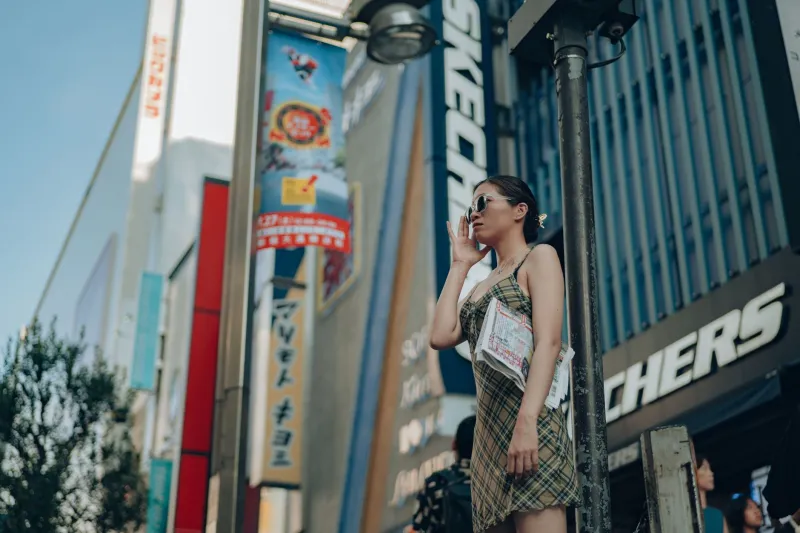
There's a word that comes up constantly when you talk to Tokyo women about their thirties: sappe. It doesn't translate cleanly into English, but the closest approximation is something like "refreshed clarity" — the feeling of having cleared out everything unnecessary and being left with only what genuinely belongs. It's not a loss. It's a relief.
In the US, turning 30 in beauty and fashion culture tends to come loaded with anxiety. Magazine headlines talk about what to "still" wear, which products will "fight" the signs of aging, how to look younger without trying too hard. The whole conversation is framed as a battle. Tokyo's approach is almost the opposite. The thirties aren't when Japanese women start defending something — they're when women start choosing, maybe for the first time, with real intention.
The Deliberate Downshift
If you follow Tokyo street style in your twenties, you'll notice a certain energy to it: layering, experimentation, bold accessories, the occasional trend that feels a little risky. That's not a bad thing. It's the visual language of figuring out who you are.
But watch what happens around 30. The silhouettes get cleaner. The color palettes contract. The statement pieces don't disappear entirely — they just become fewer and more considered. This isn't about dressing older in the American sense of the phrase. It's about dressing smarter.
Tokyo women describe this shift as moving from collecting to curating. In your twenties, you accumulate. You try things. You make mistakes and learn from them. By thirty, you've done enough of that research to actually act on what you know. The edit begins.
This shows up in wardrobes as a move toward quality fabrics with less visual noise — a perfectly cut linen trouser instead of five pairs of trendy jeans, a single cashmere-blend coat that works across seasons rather than a rotating cast of impulse buys. The goal isn't minimalism for its own sake. It's efficiency with intention.
What Happens to the Makeup Bag
The beauty shift is just as striking, and in some ways even more instructive for American women who've grown up in a culture that equates more product with better results.
In Tokyo, the thirties tend to mark a turn away from heavy foundations, dramatic contouring, and high-maintenance finishes. Not because these women are giving up on looking good — quite the opposite. They're investing more thoughtfully in skin itself, so that the need for coverage gradually decreases. The focus moves upstream, toward hydration, protection, and texture work done at the skincare level rather than the makeup level.
You'll find that women in Tokyo's beauty culture in their thirties tend to own fewer products but use each one with far more precision. A tinted moisturizer with SPF. A well-formulated essence layered with a ceramide-rich moisturizer. A single cream blush that works on lips and cheeks. A brow product that takes thirty seconds. The routine gets shorter, but the results get more consistent — because the foundation (in the literal, skincare sense) is actually doing the work.
There's also a notable shift away from chasing trends in the beauty aisle. Where a twenty-something might pick up the viral blush of the moment, a Tokyo woman in her thirties tends to be loyal to formulas she's tested and trusts. That's not closed-mindedness — it's the result of having done the experimentation already.
The Philosophy Behind the Edit
What makes this Tokyo approach genuinely different from Western anti-aging messaging is the framing. In the US, beauty culture around aging is almost entirely about subtraction — subtracting wrinkles, subtracting years, subtracting signs of time. The goal is to look like you haven't changed.
Tokyo's philosophy is about refinement, which is a completely different thing. The assumption isn't that time has taken something from you. It's that time has given you the information you need to make better choices. Your thirties aren't when you start hiding — they're when you start editing with real skill.
This reframe matters more than it might seem. When you approach your wardrobe and beauty routine from a place of subtraction, you're always in a defensive crouch. When you approach it from a place of refinement, you're in control. You're the editor, not the subject.
How to Apply This Without Waiting for a Birthday
Here's the thing about the Tokyo transition: it's not really age-dependent. It's a mindset shift that can happen at 25 or 45 or anywhere in between. The milestone is just a cultural prompt — a socially recognized moment to give yourself permission to stop performing and start choosing.
You can give yourself that permission right now.
Start with your closet. Pull out the pieces you wear on repeat — the ones you reach for without thinking because they fit well, feel right, and work with everything. Those are your anchors. Everything else is noise. You don't have to throw it all out today, but start noticing the ratio. The Tokyo goal is a wardrobe where almost everything is an anchor.
Audit your beauty routine for redundancy. How many products are you using that do essentially the same job? How many are you using out of habit rather than results? The Tokyo edit isn't about going bare — it's about making sure every product earns its spot. If something isn't noticeably improving your skin or your look, it's just friction.
Shift your spending pattern. Instead of buying several mid-range pieces or products, try buying one better version of the thing you actually need. A single well-made blazer. A moisturizer with genuinely good ingredients instead of three mediocre ones. Tokyo's approach to quality-over-quantity isn't elitist — it's actually more economical in the long run, and it produces a wardrobe and routine that feel coherent rather than chaotic.
Let go of trend pressure. This is the hardest one for Americans, because so much of our fashion and beauty culture is built around newness. The Tokyo women who have made this shift tend to describe a genuine sense of relief when they stopped tracking trends closely. They're not unaware of what's current — they're just no longer obligated to respond to all of it.
Refinement Is the Real Glow-Up
American beauty culture sells the idea that looking good requires constant effort — more products, more steps, more trend research, more spending. Tokyo's thirties philosophy suggests something almost radical by comparison: that looking your best is actually the result of doing less, but doing it with far more knowledge and intention.
The women who embody this approach in Tokyo don't look like they've given up. They look like they've arrived somewhere. There's a composed quality to how they dress and how their skin looks that has nothing to do with erasing time and everything to do with working with it.
You don't need a birthday to get there. You just need to start editing.